Commercial Access Control Installation Cost: 2026 Guide
Commercial access control installation cost represents one of the largest capital investments facility managers and business owners face when modernizing building security. The total expense depends on multiple variables: how many doors you're controlling, what type of hardware you select, whether you're retrofitting an existing building or installing in new construction, and the complexity of your site's wiring and infrastructure.
Table of Contents
- Commercial Access Control System Installation Cost Overview
- What Drives Commercial Access Control Installation Costs
- Commercial Access Control System Cost Per Door
- Hardware, Labor, and Component Pricing Breakdown
- Cloud-Based Access Control System Pricing vs. On-Premise
- Access Control System Quote Checklist
- Access Control System Installation Timeline and Labor Costs
- Retrofit vs. New Construction and Total Cost of Ownership
- Frequently Asked Questions
Last Updated: October 10, 2026
Commercial Access Control System Installation Cost Overview
Understanding these cost drivers upfront helps you budget accurately and avoid expensive surprises. At Dalcorp Solutions Inc, we work with facility managers across the Chicagoland area to design systems that balance security requirements with realistic budgets.
Most commercial access control systems fall into two categories: cloud-based solutions with monthly subscriptions, and on-premise systems requiring controllers and local infrastructure. Each carries different upfront costs and ongoing expenses, with labor costs often rivaling hardware expenses on retrofit projects.
What Drives Commercial Access Control Installation Costs
Four primary factors determine your total access control installation cost: the number of doors and access points you need to control, the specific hardware you select, your building's wiring complexity, and whether you're working with existing infrastructure or starting fresh.
Door Count and Access Points
Each door requires a card reader, electric lock or strike, controller connection, and power supply. Cost per door isn't linear: your first five doors establish controller infrastructure and conduit runs at high cost, but adding additional doors becomes more economical once that foundation is in place. Most commercial facilities control 10-50 access points, though large multi-tenant buildings may require hundreds.
Hardware Selection and Lock Types
Magnetic locks suit high-traffic areas; electric strikes work with existing locks; full electric locks offer most control. Card readers range from standard proximity to modern smart card formats. Keypads add to the cost per door for backup access. Mobile credentials require cloud infrastructure and monthly licensing.
Wiring Complexity and Site Conditions
Existing conduit runs reduce labor significantly; new conduit through walls, ceilings, or concrete escalates costs rapidly. Retrofit projects typically cost 30-50% more per door than new construction. Site conditions matter: single-story offices with accessible ceilings are straightforward; multi-story buildings with concrete floors, asbestos, or occupancy constraints require phased installation, extending timelines and costs.
Commercial Access Control System Cost Per Door
The cost per door metric helps compare quotes but masks how fixed costs (controllers, conduit, integration) distribute differently across project sizes. Most commercial installations include hardware, controllers, wiring, and labor. Understanding your actual project requires translating per-door ranges into itemized budgets.
Sample Installation Budgets by Building Size
Small Office: 10 Doors, Retrofit
Mid-Size Office: 30 Doors, Retrofit
Large Facility: 75 Doors, New Construction
How Building Type Affects Per-Door Cost
Single-story offices with accessible ceilings cost less per door than multi-story facilities with concrete floors and fire-rated doors. Glass storefronts require different hardware than solid doors. Existing conduit reduces labor 30-40% versus new runs. When comparing access control installation cost quotes, verify what's included: hardware only, or bundled with software licensing, integration, support, and backup power. A $1,200 per-door quote may exclude controllers; $1,800 may include full system architecture. Clarify these differences to compare apples-to-apples.
Hardware, Labor, and Component Pricing Breakdown
Your total access control installation cost breaks down into three major categories: the physical hardware, the labor to install it, and the system architecture that ties everything together.
Card Readers, Keypads, and Credential Options
Card readers represent the most visible component of your access control system. Standard proximity readers cost less but offer limited security. Modern smart card readers with encryption cost more but provide better protection against cloning. Dual-technology readers that accept both cards and mobile credentials add functionality but increase hardware expenses.
Keypads provide backup access when someone forgets their card. Mobile credential systems that use smartphones eliminate the need for physical cards but require cloud infrastructure and monthly licensing fees. Each credential choice affects not just hardware costs but also your ongoing software and support expenses.
Electric Locks and Door Hardware
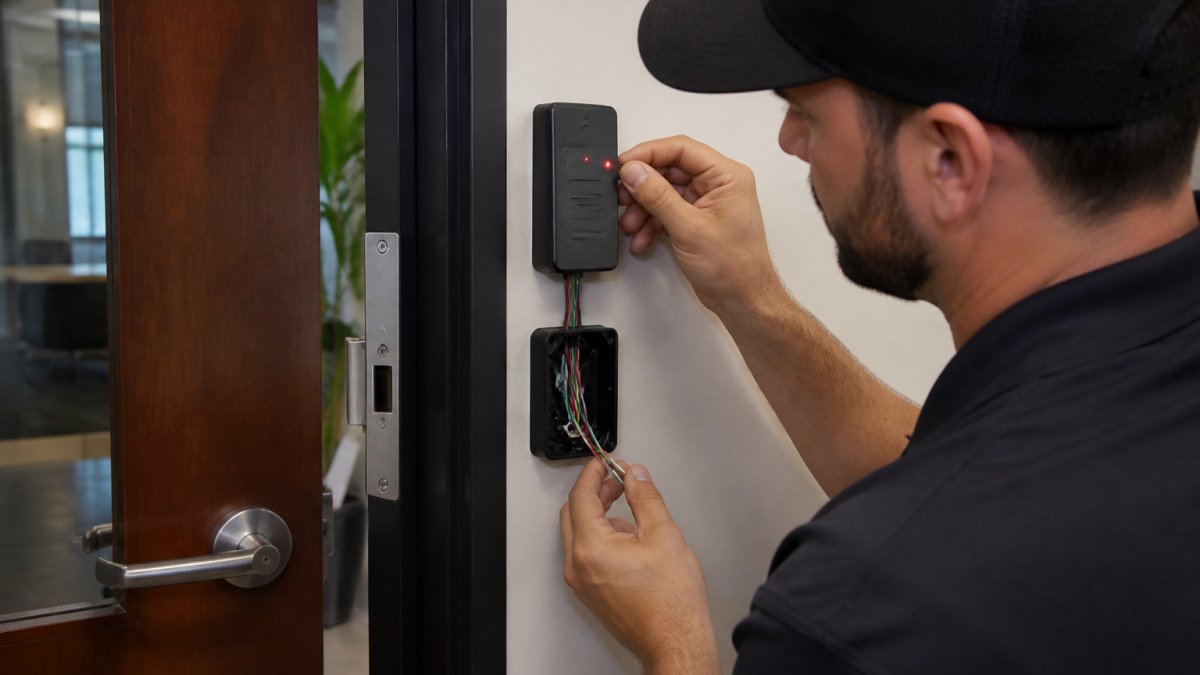
Electric strikes, full electric locks, and magnetic locks are available. Glass doors require different mounting than solid doors; fire-rated doors may require code-specific hardware, adding cost.
Controllers, Software, and System Architecture
Control panels are available for various system sizes. Cloud-based systems charge monthly per door or user; on-premise systems require one-time licenses but need local IT infrastructure. Integration with video, alarms, or building management adds complexity and cost.
Cloud-Based Access Control System Pricing vs. On-Premise
Cloud-based systems typically have lower hardware costs but add recurring monthly fees. On-premise systems cost more upfront but avoid ongoing software licensing. Over five years, cloud favors smaller installations; on-premise favors large facilities. Calculate both scenarios accounting for your IT capabilities and budget preference.
Access Control System Quote Checklist
When requesting quotes, verify hardware specifications with model numbers and itemized costs per door. Confirm labor breaks down by task: conduit, lock installation, controller setup, testing. Ask whether permits and fire-life-safety coordination are included. Clarify post-installation support: staff training, first-year support scope, software license terms, and backup power inclusion. Request references from similar retrofit projects and ask about timeline and occupancy-schedule coordination.
Access Control System Installation Timeline and Labor Costs
Labor represents 40-60% of total access control installation cost. New-construction installations take 2 weeks; occupied-building retrofits may stretch 6+ weeks if phased. Retrofit projects often encounter hidden obstacles (asbestos, concrete drilling, blocked conduit) that extend timelines and increase costs. Labor rates vary; most projects require significant hours. Simple retrofits and complex multi-building projects will have different labor costs.
Retrofit vs. New Construction and Total Cost of Ownership
Retrofit projects cost significantly more per door than new-construction installations because electricians must work around existing infrastructure, occupied spaces, and building constraints. New construction allows planning conduit runs, power supplies, and controller locations during the initial design phase, reducing installation complexity and labor. Understanding the cost drivers behind this difference, and calculating total cost of ownership over three to five years, helps you choose between system architectures and deployment strategies.
Why Retrofit Projects Cost More
In new construction, electrical contractors run conduit, power, and network cabling during the rough-in phase, before walls are closed. Access control wiring integrates seamlessly into the building's infrastructure plan. In retrofit projects, electricians must drill through existing walls, navigate around structural elements, work in occupied spaces, and often coordinate with tenants to minimize disruption. A retrofit project in a 1970s office building with concrete floors and asbestos insulation may require specialized drilling equipment, abatement coordination, and phased installation to avoid business interruption.
Retrofit labor costs typically run 30-50% higher per door than new construction. A straightforward new-construction installation might require 2-3 labor hours per door; a retrofit in an older occupied building could require 4-6 hours per door due to site constraints, discovery of hidden obstacles, and coordination overhead. Additionally, retrofit projects often require temporary access solutions during phased rollout, adding cost that new construction avoids.
Three-to-Five-Year Total Cost of Ownership Comparison
Total cost of ownership includes hardware, installation, software licensing, maintenance, support, credential replacement, and system upgrades. Comparing cloud-based and on-premise systems over a realistic ownership period reveals which approach minimizes long-term expense for your facility.
Scenario: 30-Door Retrofit, Cloud-Based System
Cloud-based systems lower upfront hardware costs but commit you to recurring monthly fees. The per-door cost appears attractive at installation, but subscription fees accumulate significantly over time.
Scenario: 30-Door Retrofit, On-Premise System
On-premise systems require higher upfront investment but avoid recurring software fees. Over five years, an on-premise system often achieves lower total cost of ownership, particularly for facilities with stable door counts and in-house IT support. The trade-off is that you own the infrastructure and bear responsibility for system maintenance, updates, and eventual hardware replacement.
Phased Implementation Strategy for Retrofit Projects
Phased implementation spreads costs across multiple budget cycles and allows you to validate your system choice before full commitment. A typical phased approach installs access control on high-security areas first, main entrances, server rooms, executive offices, then expands to secondary doors over subsequent quarters.
Phase 1 (Months 1-2): 10 doors, main entrances and server room
- Validates system choice and vendor support
- Allows staff training on a smaller scale
Phase 2 (Months 4-5): 10 additional doors, secondary entrances
- Expands coverage to additional secure areas
Phase 3 (Months 7-8): 10 additional doors, remaining areas
- Completes system deployment
For occupied facilities, phased implementation is often the only viable approach.
Choosing Between Cloud and On-Premise Based on Lifecycle Costs
Cloud-based systems favor smaller installations (10-25 doors) and organizations with limited IT infrastructure or staff. On-premise systems favor larger facilities (50+ doors) and organizations with in-house IT support and stable long-term occupancy. For mid-size facilities (25-50 doors), calculate both scenarios using your actual door count, expected subscription fees, and maintenance assumptions. A facility planning to expand doors significantly over five years may favor on-premise systems to avoid per-door subscription increases. A facility with high staff turnover and frequent credential reissue may favor cloud systems that simplify credential management through mobile credentials.
When planning a retrofit project, request lifecycle cost estimates from vendors showing hardware, installation, and five-year software and support costs. This transparency prevents the common pitfall of selecting a system based on attractive upfront pricing, only to discover that recurring fees exceed the total cost of ownership of alternative approaches.
Frequently Asked Questions
How much does a commercial access control system installation typically cost?
Total installation cost depends on the number of doors, hardware selection, wiring complexity, and labor. Small offices (5-10 doors) will have different costs than larger facilities (50+ doors). Cloud-based systems generally have lower upfront hardware costs but recurring monthly fees, while on-premise systems require higher initial investment. Contact a certified installer for a detailed quote based on your building size and requirements.
What is the average cost per door for a commercial access control system?
Per-door pricing varies widely based on hardware quality, credential type (card reader, keypad, mobile), and lock mechanism. Budget for hardware and installation labor combined; enterprise-grade systems with integrated video and analytics cost more than basic card-access solutions. Site conditions like existing wiring significantly affect per-door labor costs. Request itemized quotes from licensed installers to compare per-door pricing across different system types.
Is cloud-based access control system pricing cheaper than on-premise?
Cloud-based systems typically have lower upfront hardware and installation costs but charge monthly or annual subscription fees for software, cloud storage, and support. On-premise systems require higher initial investment in controllers and servers but eliminate ongoing software licensing. Over a five-year period, total cost of ownership depends on your facility size, support needs, and integration requirements. Compare lifecycle costs, not just installation price, when evaluating both approaches.
What should I include in an access control system quote checklist?
Request itemized quotes that specify: number of access points and door types, hardware (readers, keypads, locks, credentials), controller and software licensing, installation labor (hours and rate), wiring and infrastructure upgrades, permits and code compliance, ongoing support and maintenance, and warranty terms. Ask about integration with existing systems, video surveillance coordination, and emergency egress requirements. Clarify whether quotes include site survey, design consultation, and post-installation testing.
How long does a commercial access control system installation take?
Installation timeline ranges from one to four weeks depending on facility size, complexity, and wiring scope. Small offices (under 10 doors) may complete in days; large multi-floor buildings often require phased installation to minimize business disruption. Retrofit installations take longer than new construction because existing wiring must be assessed and upgraded. Permits and code compliance reviews can add time. A licensed installer provides a realistic schedule after the site survey.
What ongoing costs should I budget for after installation?
Ongoing costs include software licensing or cloud subscriptions, technical support and maintenance contracts, credential replacement (cards, fobs, mobile credentials), hardware repairs or upgrades, and system monitoring. Cloud-based systems charge monthly fees for access management and data storage. On-premise systems may require IT staff time and server maintenance. Budget for annual maintenance and support to ensure long-term reliability.
Does retrofit installation cost more than new construction access control?
Retrofit installations typically cost significantly more because existing wiring must be assessed, upgraded, or replaced. New construction allows integrated planning and conduit installation during building phase. Retrofit projects may require wall openings, cable routing, and structural coordination, increasing labor. However, phased retrofit approaches can spread costs over time. A site survey comparing your existing infrastructure to new-system requirements determines the actual cost difference.
- Hits: 11