Benefits of Integrated Building Network Systems
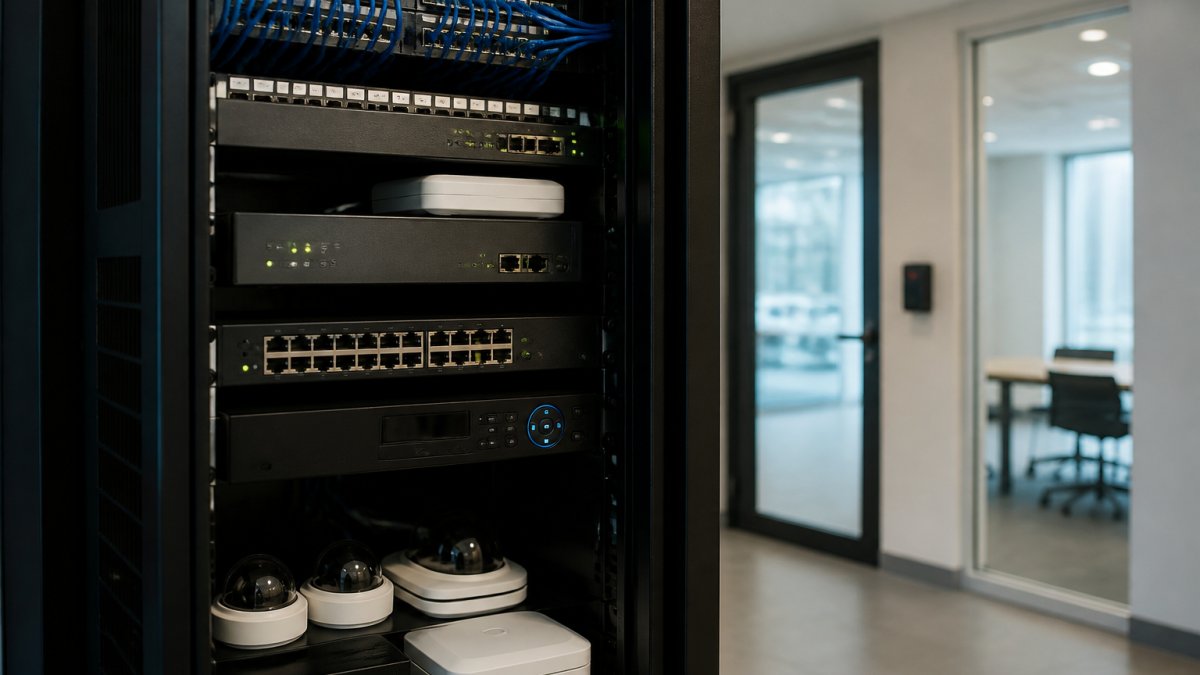
An integrated building network system connects multiple building technologies, HVAC, lighting, security, access control, and occupancy sensors, into a unified platform where they communicate and work together. Instead of managing separate systems with different controls, interfaces, and maintenance schedules, integration creates a single nervous system for your entire building.
Table of Contents
- What Integrated Building Network Systems Do
- Energy Efficiency and Lower Operating Costs
- Centralized Monitoring and Real-Time Control
- Building Automation System Benefits for Maintenance and Equipment Life
- Building Systems Integration Challenges and How to Overcome Them
- Building Network Security Best Practices
- Occupant Comfort, Safety, and User Control
- Frequently Asked Questions
Last Updated: October 16, 2026
What Integrated Building Network Systems Do
This matters because building systems don't operate in isolation. When your HVAC system doesn't know how many people are in a room, it can't adjust efficiently. When your lighting doesn't coordinate with occupancy, you're wasting energy. When security and access control run on separate networks, you lose visibility into what's happening across your facility.
At Dalcorp Solutions Inc, we've designed and deployed integrated building network systems for commercial offices, retail spaces, and healthcare facilities throughout Chicagoland. The shift from fragmented systems to integrated ones changes how buildings perform, and how much they cost to operate.
Below, we'll walk through the specific benefits that make this integration worth the investment, the challenges you'll face in implementation, and how to approach security in a connected building environment.
Energy Efficiency and Lower Operating Costs
Integrated systems reduce energy waste by creating feedback loops between sensors and equipment. When occupancy sensors detect an empty conference room, the system can simultaneously lower HVAC output, dim or turn off lights, and adjust temperature setpoints. This coordination happens automatically and continuously.
A common mistake is assuming that energy savings come only from better equipment. They don't. Savings come from visibility and coordination. A traditional building might run its HVAC at a constant level all day, then manually adjust lighting zones based on time of day.
The real difference between a managed building and an unmanaged one comes down to this: can your systems see what's happening, and can they talk to each other? If yes, you eliminate the waste that comes from systems operating independently.
Energy management integrates HVAC performance data with occupancy patterns, so your mechanical systems don't overcool or overheat unoccupied spaces. Lighting automation uses daylight harvesting and occupancy sensors to eliminate unnecessary consumption.
Operating costs drop because you're not paying to condition, light, or secure spaces that aren't in use. For retail operations with variable foot traffic, this can be significant. For office buildings with hybrid schedules, integrated systems adapt to actual occupancy instead of assuming full capacity all day.
Centralized Monitoring and Real-Time Control
Centralized monitoring gives facility managers visibility into what's actually happening across the entire building. Instead of checking ten different dashboards, you see one unified view of system status, alerts, and performance metrics.
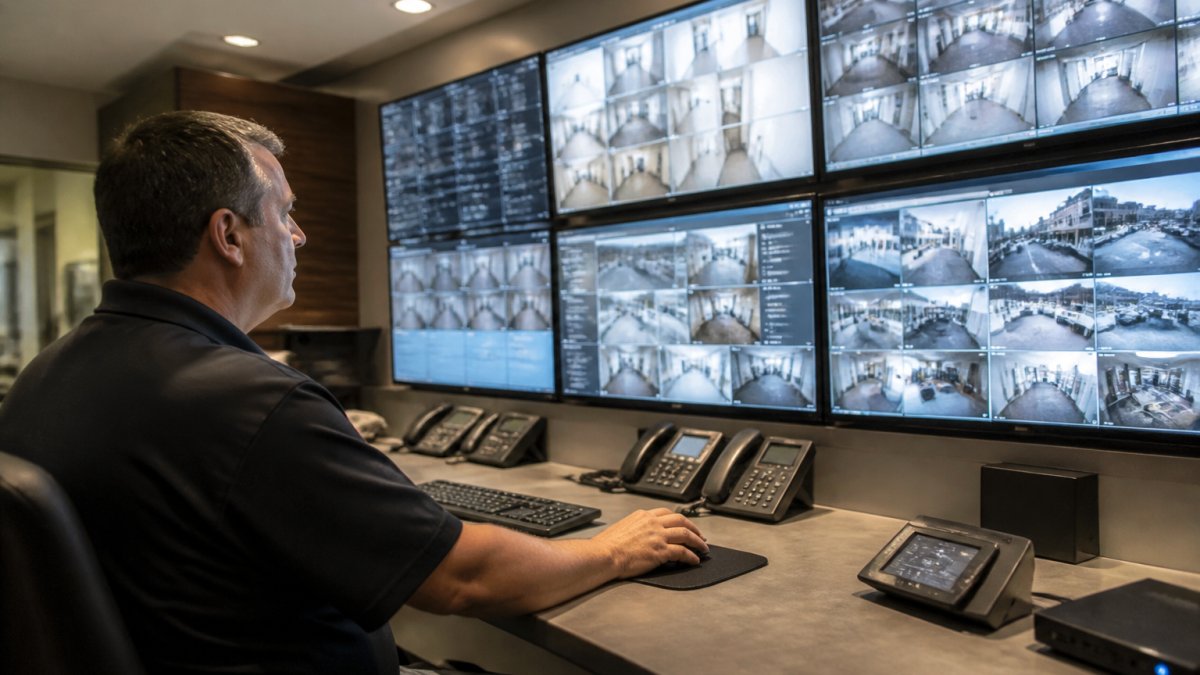
Real-time data means you can respond to problems before they become emergencies. If a sensor detects an HVAC malfunction, the system flags it immediately. If access control logs show an unusual pattern, you see it as it happens. If a section of the building is running warmer than setpoint, you know why and can adjust.
This visibility also changes how you manage building operations. Instead of reactive maintenance, waiting for something to break, you can see trends in equipment performance and schedule maintenance when it's convenient, not when you're forced to.
The operational data from integrated systems tells you how your building is actually being used. You learn which spaces are overcrowded, which are underutilized, and where occupants are uncomfortable. That information lets you make smarter decisions about space allocation, renovation priorities, and future design.
Building Automation System Benefits for Maintenance and Equipment Life
Equipment breaks down faster when it's overworked or operated outside its intended parameters. An integrated building automation system extends equipment life by ensuring components operate within optimal ranges and receive maintenance before failure.
Predictive maintenance uses equipment performance data to forecast when components are likely to fail. Instead of following a fixed maintenance schedule, you service equipment based on actual condition. This reduces unnecessary maintenance while catching real problems early.
Building systems integration coordinates maintenance across multiple systems. When you service HVAC equipment, the system can notify you about related components, filters that need replacement, ductwork that needs cleaning, sensors that should be recalibrated. This prevents the common scenario where you fix one problem and miss related issues that will cause failure within months.
Downtime costs money. Every hour a retail location's HVAC is down, you're uncomfortable for customers and staff. Every hour an office building's access control is offline, you have security gaps. Integrated systems reduce downtime by catching problems early and enabling faster diagnosis when issues do occur.
Equipment longevity improves because integrated systems operate components at consistent, optimal levels. Your HVAC doesn't cycle excessively. Your lighting doesn't experience voltage fluctuations. Your security cameras aren't overloaded with recording tasks during periods when they're not needed. The cumulative effect is measurable, equipment lasts longer and performs more reliably.
Building Systems Integration Challenges and How to Overcome Them
Integration sounds straightforward until you try to connect systems that were never designed to talk to each other. Legacy buildings often have older HVAC systems, access control platforms from different vendors, and lighting systems that predate modern networking standards.
The first challenge is interoperability. Not all building systems use the same communication protocols. Your access control might use one standard, your HVAC another, your lighting a third. Integration requires either translation layers that convert between protocols or replacement of incompatible systems.
The second challenge is data quality. If sensors are miscalibrated or networks are unreliable, the data flowing into your central system is garbage. Garbage in means poor automation decisions and unreliable alerts.
Here's how to approach these obstacles:
-
Audit your current systems before committing to integration. Document what you have, what it communicates, and what standards it supports. This reveals which systems can integrate directly and which require translation or replacement.
-
Choose integration standards that your existing systems support. Common protocols like BACnet, Modbus, and MQTT can bridge many legacy systems. Some integrators use middleware platforms that translate between protocols.
-
Implement integration in phases. Start with systems that are easiest to integrate and generate the fastest payback. HVAC and lighting integration typically delivers results within months. Security and access control integration can follow once you've validated the approach.
-
Validate data quality during pilot phases. Before deploying automation across your entire building, test it in one zone or one floor. Verify that sensors are accurate and that automated responses are correct.
-
Plan for ongoing support. Integration creates interdependencies between systems. When one system fails, others may be affected. Ensure your integration partner, whether Dalcorp Solutions Inc or another provider, commits to ongoing monitoring and support.
Building systems integration challenges are real, but they're solvable with proper planning and expertise. The buildings that struggle are the ones that try to integrate without understanding their current infrastructure.
Building Network Security Best Practices
A connected building is a more efficient building, but it's also a more vulnerable one if security isn't built in from the start. Every device connected to your building network is a potential entry point for attackers.
Building network security starts with network segmentation. Your occupancy sensors don't need access to your access control system. Your lighting controls don't need to reach your security cameras. By separating systems onto different network segments, you limit the damage if one system is compromised.
The second principle is authentication and encryption. Every device that connects to your building network should require authentication. Every communication should be encrypted so that data in transit can't be intercepted. This prevents attackers from spoofing devices or eavesdropping on control commands.
The third principle is regular updates and patching. Building systems are often installed and then forgotten. Vendors release security patches, but facility managers don't apply them because they're afraid of disrupting operations. This creates a growing security gap over time.
Here are specific practices to implement:
- Change default credentials immediately. Manufacturers ship devices with default usernames and passwords. Change them before the system goes live.
- Use strong, unique passwords for each system and each administrative account.
- Implement network monitoring so you can see what devices are communicating and detect unusual traffic patterns.
- Restrict physical access to network equipment, controllers, and devices. A motivated attacker with physical access can often bypass digital security.
- Establish a patch management process. Test updates in a non-critical environment first, then deploy to production on a schedule that minimizes disruption.
- Require VPN access for remote management of building systems. Never expose control interfaces directly to the internet.
- Audit access logs regularly. Know who accessed what systems and when. Unusual access patterns often signal a security problem.
Building network security is not a one-time project. It's an ongoing practice that requires attention and resources. Facilities that treat it as a checkbox, "we installed security", eventually get breached. Facilities that treat it as a continuous process stay protected.
Occupant Comfort, Safety, and User Control
Integrated systems improve occupant experience by responding to real conditions instead of operating on fixed schedules. When a room is too warm, the system detects it and adjusts.
User control matters. Occupants who can adjust their environment, temperature, lighting, privacy settings, report higher satisfaction and productivity.
Safety benefits from integration because systems can coordinate emergency responses.
Indoor air quality monitoring integrates with HVAC control to maintain healthy conditions.
Comfort, safety, and air quality aren't separate concerns, they're interconnected. A building that's too hot and poorly ventilated is uncomfortable and unhealthy.
Integrated building network systems solve real problems: wasted energy, operational complexity, equipment failures, and occupant dissatisfaction. The challenges are real too, legacy systems don't integrate easily, and security requires ongoing attention.
The buildings that benefit most from integration are the ones that treat it as a comprehensive strategy, not a single project.
Dalcorp Solutions Inc has completed over 2,000 projects across Chicagoland, helping facility managers, business owners, and property managers modernize their building infrastructure.
If your building is struggling with fragmented systems, high operating costs, or security gaps, an integrated approach is worth exploring.
| Challenge | Approach | Expected Outcome |
|---|---|---|
| Fragmented systems, no central visibility | Implement centralized building management platform | Real-time monitoring and coordinated control |
| High energy costs, inefficient HVAC and lighting | Integrate occupancy sensors and automate adjustments | Lower utility costs, improved occupant comfort |
| Reactive maintenance, unexpected equipment failures | Deploy predictive maintenance using equipment performance data | Extended equipment life, reduced downtime |
| Legacy systems can't communicate | Implement protocol translation or phased system replacement | Interoperability across all building systems |
| Security vulnerabilities in connected systems | Segment networks, enforce authentication, manage patches | Protected building network, reduced breach risk |
According to Schneider Electric's research on modern building management, buildings that implement integrated systems see measurable improvements in tenant comfort, safety, and energy efficiency.
Frequently Asked Questions
What is an integrated building network system?
An integrated building network system connects multiple building technologies, HVAC, lighting, access control, video surveillance, and Wi-Fi, through a unified platform. Instead of operating independently, these systems communicate and share data, allowing centralized monitoring and coordinated control. This interconnection improves operational efficiency, reduces manual management, and enables automated responses to building conditions.
How can integrated building network systems reduce operating costs?
Integrated systems cut costs through several mechanisms. Real-time monitoring identifies energy waste and inefficiencies in HVAC and lighting, allowing operators to adjust consumption based on actual occupancy. Predictive maintenance alerts flag equipment problems before they cause expensive failures or downtime. Centralized control eliminates redundant management tasks and reduces labor overhead. Combined, these factors lower utility bills, maintenance expenses, and unplanned downtime costs.
What building systems integration challenges should we expect?
Common challenges include legacy equipment that doesn't communicate with modern systems, incompatible protocols between different vendors, and the complexity of retrofitting older buildings without major disruption. Cybersecurity risks increase when systems are networked. Integration also requires skilled planning and installation. Working with certified professionals who understand code requirements, interoperability standards, and your building's existing infrastructure helps you avoid costly missteps and ensures a smooth deployment.
How do I secure an integrated building network?
Building network security requires firewalls, encrypted data transmission, strong access controls, and regular software updates. Segment your building network from your main IT network when possible. Implement multi-factor authentication for system access. Monitor network traffic for anomalies. Change default passwords and disable unused ports. Partner with licensed, insured integrators who follow security best practices and stay current on vulnerabilities. Regular security audits help identify and patch gaps before they become exploitable.
- Hits: 6