Is Direct-View LED Worth the Investment in 2026?
Direct-view LED is worth the investment for large, bright, seamless installations that will run for years and serve a measurable purpose, such as lobbies, retail floors, and control rooms. It costs more upfront than LCD video walls, so it is harder to justify for small displays or tight budgets.
Last Updated: November 12, 2026
Quick Summary
- Pixel pitch is the biggest cost lever and sets the viewing distance you need.
- Direct-view LED can offer lower total cost of ownership over time than its sticker price suggests.
- Modular design lets a single failed module be replaced instead of a whole panel.
- Build a five-year TCO model with every assumption stated and checked against written quotes.
- Justify the purchase with measurable benefits, not benefits that cannot be tracked.
Table of Contents
- What Direct-View LED Is and How the Pieces Fit Together
- Direct-View LED Display Cost: Upfront Price, Installation, and Pixel Pitch
- Direct-View LED vs. LCD Video Wall and Projection: Where Each Wins
- A Transparent Lifecycle Cost Model: Five-Year TCO With Stated Assumptions
- Retail LED Video Wall ROI: Worked Scenarios by Use Case
- LED Video Wall Maintenance, Lifespan, and Technical Trade-Offs
- Deciding Whether to Buy in 2026: A Buyer Checklist and Next Step With Dalcorp
- Frequently Asked Questions
What Direct-View LED Is and How the Pieces Fit Together
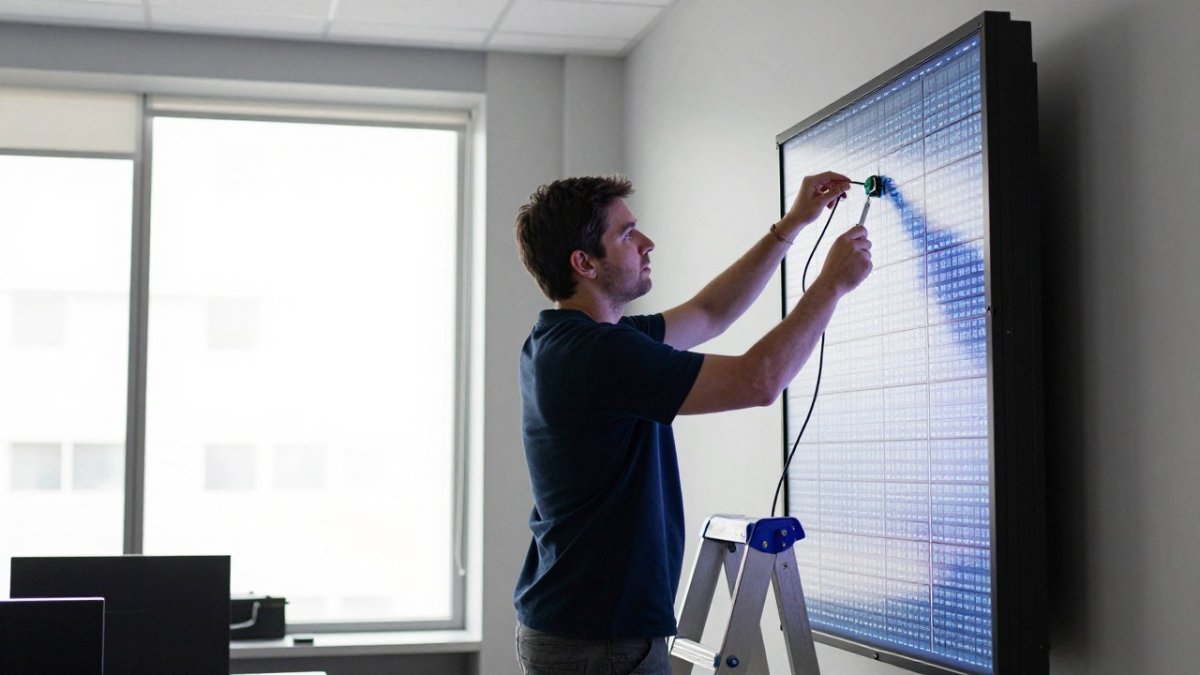
Direct-view LED (dvLED) is a display technology that uses light-emitting diodes as the picture itself, rather than as a backlight behind a liquid crystal layer. Each pixel is built from red, green and blue diodes that combine to produce full-color images. Sharp describes the technology in exactly these terms on its business site, noting that the LEDs generate the red, green and blue colors in a full-color image (Sharp Business USA direct-view LED overview).
Several components determine how a direct-view LED wall performs. The main ones are:
- Pixel pitch: the distance between the centers of neighboring pixels, usually measured in millimeters. Smaller pitch gives sharper images at close viewing distances, but costs more per square foot.
- Cabinets: the modular panels that tile together into a seamless surface.
- Driver and controller electronics: these translate video input into pixel data and manage brightness and color calibration.
- Power and cooling: LED walls draw significant power and produce heat, both of which shape installation requirements.
Deciding on pixel pitch early is a sensible starting point, since it sets the viewing distance and the resolution you need.
Direct-View LED Display Cost: Upfront Price, Installation, and Pixel Pitch
Pricing for direct-view LED walls depends on pixel pitch, screen size, mounting, structural work, and control system integration. Current prices for Dalcorp Solutions Inc's services depend on the specific scope of work, so request a written quote for your site.
What drives the quote. Several general cost drivers apply to LED video wall projects:
- Pixel pitch: finer pitch requires more diodes per square meter, so the price per square foot rises as pitch falls. Pitch is the single largest lever on both cost and viewing distance.
- Screen size and resolution: cost scales with area, and matching a target resolution at a given size forces a specific pitch.
- Installation scope: wall preparation, structural reinforcement, power runs, data cabling, and rigging can add meaningfully to the display cost, more in older buildings or on uneven walls.
- Control and content systems: a media player, scheduling software, and remote management add to the total.
- Service access: front-service cabinets cost more than rear-service designs but avoid the need for a rear access aisle, which can save floor space and structural work.
ViewSonic notes that upfront cost is a real consideration when comparing direct-view LED with LCD video walls (ViewSonic LCD vs. LED video wall comparison). That is the right frame: the question is not whether dvLED costs more to buy, but what it costs to own over time. The next section puts those upfront numbers into a five-year model.
Direct-View LED vs. LCD Video Wall and Projection: Where Each Wins
Each display type suits different conditions. The table below summarizes the trade-offs in general terms.
| Factor | Direct-View LED | LCD Video Wall | Projection |
|---|---|---|---|
| Upfront cost | Higher | Lower at comparable size | Varies widely |
| Seamless surface | Yes, with minimal bezel | Visible bezels | Depends on screen setup |
| Brightness in daylight | Strong | Moderate | Weak without bright lamps |
| Viewing distance | Set by pixel pitch | Set by bezel and panel size | Set by throw distance |
| Maintenance | Modular panel replacement | Panel replacement, bezel seams | Lamp or light source replacement |
ViewSonic argues that dvLED offers visual quality and easier maintenance than LCD video walls, which is consistent with the modular design (ViewSonic dvLED maintenance and visual quality). Teamlinx similarly highlights energy efficiency and adaptability for business use (Teamlinx direct-view LED video wall guide).
Our view: LED wins for large, bright, seamless installations in lobbies, retail floors, and control rooms. LCD suits smaller, lower-budget displays viewed close up. Projection can work in dark rooms but struggles in ambient light.
A Transparent Lifecycle Cost Model: Five-Year TCO With Stated Assumptions
Total cost of ownership (TCO) adds the purchase, installation, operation, and maintenance costs over the system's working life. UberDisplays frames the venue-buyer decision around TCO rather than sticker price, and notes that dvLED may offer a lower TCO over time in some cases (UberDisplays guide for venue buyers). A model is only useful if you can see and change every assumption, so here is a worked example with round numbers you can swap for your own.
How to use it. Fill in each line using quotes and your utility bill rather than estimates. Change the operating hours and electricity rate first, because they swing the annual number more than anything except maintenance. Then test the model against an LCD video wall and a projection setup at the same size so the comparison is apples to apples. A model with unstated inputs cannot be checked, and an unchecked model is not a basis for a purchase decision.
Retail LED Video Wall ROI: Worked Scenarios by Use Case
Return on investment depends on what the display does for the business. A retail floor, a corporate lobby, and a control room each measure value differently.
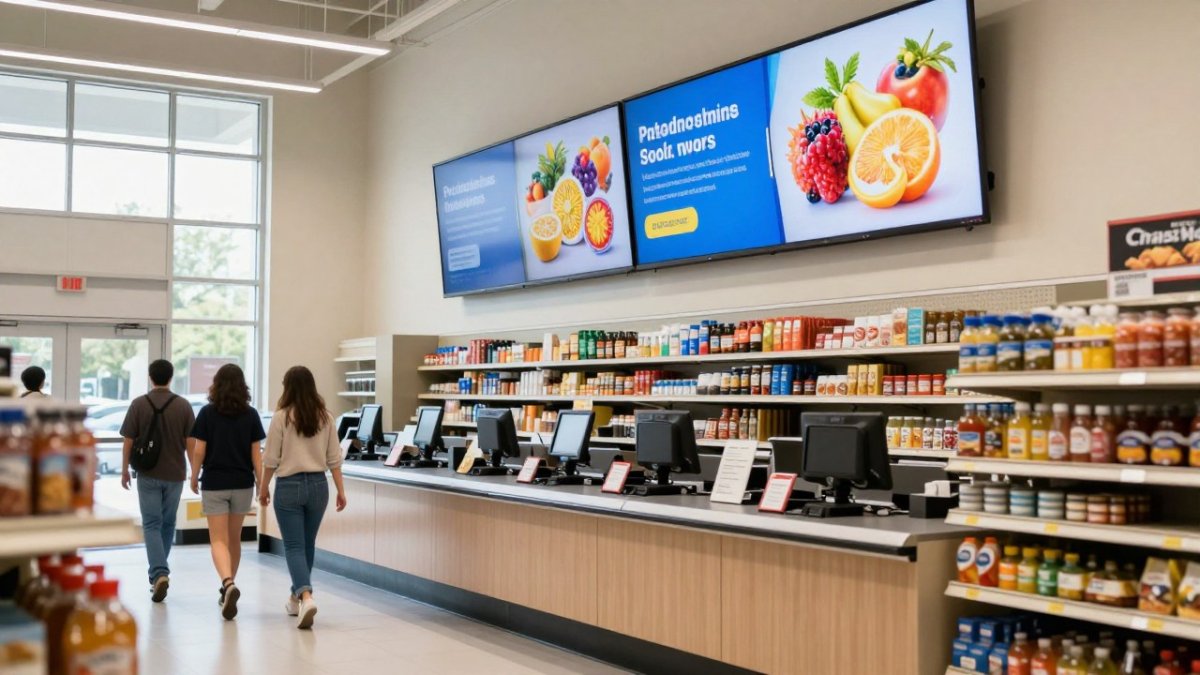
Retail: the wall's return comes from promotional revenue, dwell time, or higher conversion in the store. Track sales lift in the zone around the display against a control period.
Corporate lobby: value is brand presence and visitor experience. ROI is harder to quantify, so define a measurable goal, such as reduced inbound questions or higher event attendance, before buying.
Control room: value is operational. A clear wall that prevents a single missed alert can justify the cost, though the case should be made with your own incident data.
Use a simple framework: estimate the annual benefit in dollars, subtract the annualized TCO, and divide by the TCO to get a percentage return. Use only benefits you can measure. If a benefit cannot be tracked, treat it as a bonus, not a basis for the purchase.
LED Video Wall Maintenance, Lifespan, and Technical Trade-Offs
Direct-view LED walls have a finite working life, and brightness declines gradually over time. Usable life depends on how the wall is run. Running at full brightness shortens life, while calibrated lower brightness extends it.
Maintenance has three parts: keeping cabinets clean and cooled, monitoring for dead or stuck modules, and replacing modules as they fail. Modular design makes a single-module swap practical, which is one of the strongest arguments for dvLED over LCD walls, where a damaged panel often means replacing a larger unit.
Trade-offs to weigh honestly:
- Fine pixel pitch costs more and can need more cooling.
- Higher brightness raises power draw and heat.
- Service contracts reduce risk but add to the annual cost.
- Viewing angle and color uniformity should be checked on the actual unit, not assumed from a spec sheet.
Deciding Whether to Buy in 2026: A Buyer Checklist and Next Step With Dalcorp
Direct-view LED is worth the investment when the wall is large, needs to be bright and seamless, will run for years, and has a measurable purpose. It is harder to justify for small displays, low budgets, or spaces where the content does not change the business outcome.
Before you buy, confirm these points:
- Viewing distance and pixel pitch are matched to the room.
- You have written quotes covering hardware, installation, and controls.
- Your five-year TCO model lists every assumption.
- The ROI case uses measurable benefits.
- Maintenance and module replacement terms are in writing.
- The installer is licensed, insured, and factory-certified.
Dalcorp Solutions Inc designs and installs LED video walls as part of integrated low-voltage and networking projects across the Chicagoland area. To discuss your space and goals, submit your site details and objectives for a proposal. If you are comparing installation providers, our guide to LED video wall installation services in 2026 covers what to look for.
Frequently Asked Questions
Is direct-view LED better than an LCD video wall?
Direct-view LED usually wins on brightness, contrast, and seamless tiling, because it has no visible bezels and performs well in bright rooms. LCD video walls cost less upfront and suit smaller viewing distances in controlled lighting. Pricing depends on pixel pitch, screen size, and installation scope, so request a site-specific quote from Dalcorp Solutions Inc for current figures.
How long do direct-view LED displays last?
Real service life of direct-view LED modules depends on brightness settings, heat, and ventilation. Running the display at lower brightness typically extends it. Confirm the rated lifespan and warranty terms in writing from any vendor, and ask how the rating is defined, since some specifications measure time to a set brightness drop rather than total failure.
How do you calculate the ROI of a retail LED video wall?
Start with the total cost of ownership over the expected service period, including hardware, installation, power, content management, and maintenance. Then estimate the revenue or savings the display produces, such as promotional lift, dwell time, or reduced signage printing costs. Divide the net gain by the total cost to see the payback period.

- Hits: 6