Is Professional Smart Home Security Worth It?
Professional smart home security is worth it when the system fits your home, your monitoring budget and your insurer's requirements. For most US homeowners, the answer depends on what the system includes, what monitoring costs over several years, and whether your insurer will reduce your premium for it.
Last Updated: November 8, 2026
Quick Summary
- Ask installers to put in writing which devices are included and which are optional.
- Hardwired retrofits in older homes with masonry or plaster walls cost more in labor than wireless retrofits.
- Ask for the total contract value, not just the monthly monitoring rate.
- Some monitoring agreements auto-renew and carry early-termination fees, so read the contract term before signing.
- Get insurer discount requirements in writing, since a verbal yes from a sales rep does not bind the insurer.
Table of Contents
- What Professional Smart Home Security Actually Includes
- Professional vs. DIY Home Security Systems
- Home Security System Cost and Monitoring Fees
- Does an Alarm System Reduce Home Insurance?
- Smart Home Security Insurance Discounts and Break-Even Math
- Leak, Smoke, and Temperature Sensors: Do They Add Value?
- Booking a Site Survey to Test the Numbers for Your Home
- Frequently Asked Questions
Is professional smart home security worth it? For most US homeowners, the answer depends on three things: what the system actually includes, what monitoring costs over several years, and whether your insurer will reduce your premium for it. Dalcorp Solutions Inc installs integrated security, low-voltage and networking systems across the Chicagoland area. This guide walks through each one so you can decide with numbers rather than sales pitches.
What Professional Smart Home Security Actually Includes
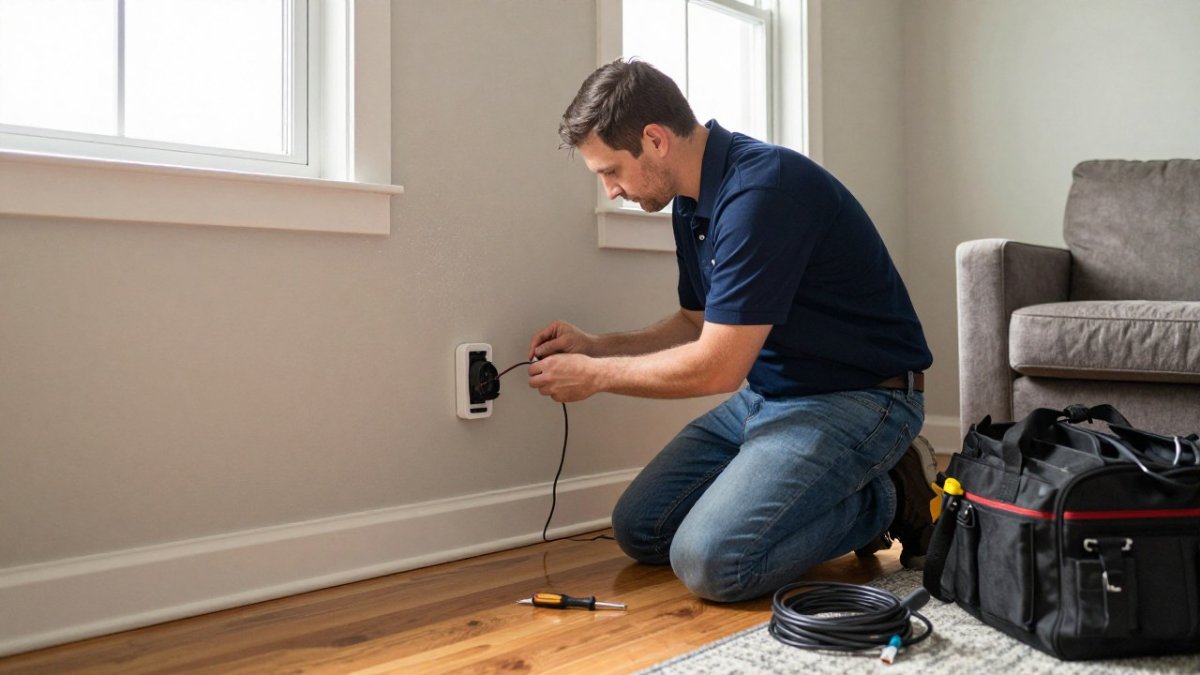
A professional smart home security system is more than a few cameras and a door sensor. It is a designed system: entry-point sensors, motion detection, video devices, a control panel, and the low-voltage wiring and Wi-Fi network that connect everything reliably. Many homeowners buy the devices but skip the network planning, and that is where systems fail.
Ask any installer to put in writing which devices are included and which are optional.
Professional vs. DIY Home Security Systems
DIY systems are cheaper to start and easier to move between homes. Professional systems cost more up front but are designed around your floor plan, your wiring and your risk points. The gap matters most in older homes, where wireless devices can struggle through masonry and metal framing.
Choose DIY if you have a small space, a renter's schedule, or the time to test and maintain devices yourself. Choose professional installation if you want wired reliability, integration with existing systems, or documented work that an insurer may ask for. If you are weighing DIY, you can check whether smart locks and video doorbells can be integrated through one app, a partner integration, or a hub. Many homeowners also find that a hybrid approach works: a professionally designed core with a few DIY add-ons.
Home Security System Cost and Monitoring Fees
Total cost has two parts: equipment and installation, then ongoing monitoring. Most US homeowners end up comparing three purchase structures, and the structure matters more than the sticker price.
Upfront equipment and installation. The cost of a professionally installed system depends on quantity, wiring and devices; contact Dalcorp Solutions Inc's website for current prices or a quote. Adding video cameras, a video doorbell, glass-break sensors, or a cellular backup module pushes the total higher. Hardwired runs in older homes with masonry or plaster walls cost more in labor than a wireless retrofit, because the installer has to fish cable and patch openings. Ask for a line-item quote that separates devices, labor, wiring, and any activation fee so you can compare bids on equal terms.
Monitoring fees. This is the recurring line most buyers underestimate. Self-monitored systems send alerts to your phone with no monthly monitoring fee, but you are the response plan. Monitoring fees depend on the plan, features and contract terms; contact Dalcorp Solutions Inc's website for current prices or a quote. Read the contract term before you sign: many monitoring agreements auto-renew and carry an early-termination fee, and some bundle equipment financing into the monthly payment so the true equipment cost is hidden inside the subscription.
What drives the number up or down. Device count, wired versus wireless, camera resolution and local versus cloud storage, cellular backup, and whether the panel integrates with lights, locks, and thermostats.
Watch out: a low monthly headline can hide a long contract term, an equipment financing charge, or a required landline or internet service. Ask for the total contract value, monthly fee times term, plus any activation and termination fees, not just the monthly rate.
Compare the monitoring fee against the cost of an unmonitored system plus your own response plan. If nobody is home during the day and you want a professional dispatch, monitoring earns its fee; if you work from home and can act on an alert, self-monitoring may be enough. Over a five-year period, the monitoring line often becomes the largest part of the total, so it deserves the most scrutiny.
The table below sums up the cost structure described in this section.
| Cost part | What it covers | Watch for |
|---|---|---|
| Upfront equipment and installation | Devices, labor, wiring and any activation fee | Get a line-item quote to compare bids |
| Monitoring fees | Recurring plan charge for professional monitoring | Auto-renewal and early-termination fees |
| Self-monitoring | Phone alerts with no monthly monitoring fee | You become the response plan |
| Hardwired retrofit in older homes | Cable fishing and wall patching labor | Costs more than wireless retrofit |
| Total contract value | Monthly fee × term, plus activation and termination fees | Low monthly headline can hide long terms |
Does an Alarm System Reduce Home Insurance?
Some insurers offer premium discounts for qualifying security equipment, and the rules differ by company. A discount is not automatic, and the amount varies with the equipment, whether monitoring is active, and your policy. Many homeowners find the savings are modest relative to the total cost of a system, so treat any discount as a bonus rather than the reason to buy.
Start by asking your insurer for its written discount requirements. Request the name of the discount program, the qualifying devices, any monitoring requirement, and the proof of installation they accept. Note that proof may be a certificate from a professional installer or a monitoring company's documentation.
Insurer-by-Insurer Eligibility and Discount Requirements
Eligibility differs across carriers. Some require professional monitoring, some accept self-monitored systems with specific sensors, and some only credit certain brands. Before you buy, call your agent with your planned equipment list and ask whether each device qualifies. Get the answer in writing. A verbal "yes" from a sales rep does not bind the insurer at claim time.
Smart Home Security Insurance Discounts and Break-Even Math
Most articles tell you a discount may exist and stop there. The useful question is whether the verified discount exceeds what you pay for the equipment and monitoring over the years you plan to keep the system. Run the math before you buy, not after.
The break-even formula. Net cost over N years = (equipment + installation) + (monthly monitoring × 12 × N) − (verified annual premium discount × N). If the result is positive, insurance alone does not pay the system back; the case then rests on protection, convenience, and any avoided losses. If it is negative, the discount more than covers the system on insurance grounds alone.
Run your own sensitivity check. Plug in three discount levels your insurer might confirm, low, mid, and high, and see which one, if any, flips the result negative. Then ask: would I still buy the system if the discount were zero? If yes, the discount is a bonus. If no, the purchase is being justified by a number you have not verified yet.
Device categories change the math. Burglar alarms are the device most people associate with discounts, but leak detectors, freeze sensors tied to an automatic shutoff valve, and smoke and carbon monoxide detectors often carry their own credits because they prevent the water and fire losses insurers actually pay for. A $50 leak sensor under a water heater can qualify for a credit that a $400 camera does not. Ask your insurer which categories qualify before you allocate budget, and price each category against its own potential credit rather than treating the whole system as one line.
Verify before you install. Call your agent with the planned device list and ask for the discount program name, the qualifying devices, any monitoring requirement, the documentation they accept, and whether the credit is a percentage of premium or a flat amount. Get it in writing. A verbal yes from a sales rep does not bind the insurer at renewal, and some carriers cap the credit or require the system to be professionally monitored to keep it.
Watch out: a discount quoted as a percentage of premium shrinks when your premium shrinks, and some carriers remove the credit if monitoring lapses. Confirm the renewal terms, not just the first-year number.
Leak, Smoke, and Temperature Sensors: Do They Add Value?
Security is not the only reason to add sensors. Water leak detectors, freeze sensors connected to an automatic shutoff valve, and smoke and carbon monoxide detectors address damage that burglary alarms do not. Water damage is a common home claim, so these devices can prevent larger losses than theft in many homes.
Treat leak and freeze sensors as a separate line item with their own value. Ask your insurer whether they qualify for a separate credit, since some carriers recognize them even when the security system does not. Place leak sensors under sinks, near water heaters and beside washing machines, where failures usually start.
Booking a Site Survey to Test the Numbers for Your Home
The fastest way to decide is to get a real equipment list and quote for your home. Dalcorp Solutions Inc is licensed and insured, with 25+ years of experience in Chicagoland and factory-certified installations. A site survey lets our team map your entry points and test signal coverage.
book a free site survey to get a quote tied to your floor plan. If you want to understand planning before you talk to an installer, our smart security system planning guide covers entry points, sensors and low-voltage infrastructure. For a wider look at what professional installation covers, see our smart home systems overview, and for a cost-focused plan read how to plan a home automation system.
Professional smart home security is worth it when the system fits your home, your monitoring budget and your insurer's requirements. Confirm each of those before you commit. Contact Dalcorp Solutions Inc to start with a survey and a written quote.
Frequently Asked Questions
Does having a home security system reduce homeowners insurance?
It can, but the reduction depends on the insurer and the type of system. Many carriers offer a discount when a monitored alarm or qualifying smart devices are installed, and some require proof of installation or an active monitoring contract. Discounts are usually a percentage of the premium rather than a fixed amount, so the savings should be checked against your current policy and any monthly monitoring fee before you decide.
Does Ring count as a security system for insurance?
Not always. Insurers generally look for a monitored alarm system or a set of qualifying devices such as door and window sensors, smoke detectors tied to monitoring, and water leak sensors. A standalone video doorbell or camera may not meet the requirement on its own. Ask your insurer directly which devices qualify and what documentation they need, such as an installation certificate, before assuming a discount applies.
How much can a security system save on homeowners insurance?
Savings vary widely by insurer, location, and coverage level, and published discounts commonly fall in a modest percentage range. To estimate your own number, take your annual premium, multiply by the discount percentage your insurer offers, then subtract the annual cost of equipment amortized over its life and the annual monitoring fee. If the result is near zero or negative, the system may be justified by safety reasons alone rather than insurance savings.
Is professional home security better than DIY?
Professional monitoring generally offers round-the-clock response to alarm signals, while DIY systems rely on you or a self-selected contact to respond. Professional systems also tend to qualify for more insurance discounts because insurers view monitored alarms as more reliable. DIY systems can be lower in cost and easier to change, so the better choice depends on whether you need a monitored response and whether the insurance discount outweighs the monthly fee.

- Hits: 12