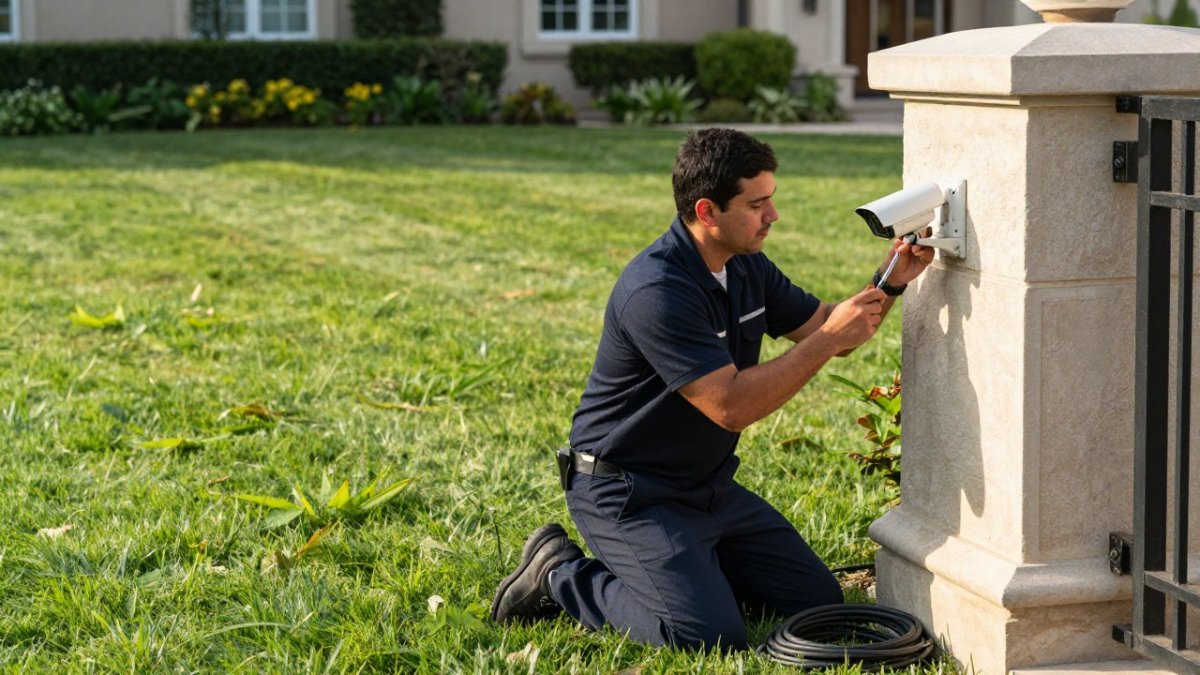
5 Best Smart Home Security Systems for Large Properties 2026
The best smart home security for large properties is a layered system covering the perimeter, driveway and gate, entry points, outbuildings and interior, planned from a zone map. Wi-Fi reach must be confirmed at each camera location before buying. Five credible options include ADT, Vivint, SimpliSafe, Abode and Ring, each suited to different needs.
Quick Summary
- Divide the property into zones, starting with a map rather than a shopping cart.
- Use five layers: perimeter, approach, entry, structure and interior.
- Put one camera at the gate and one at the house, overlapping at the midpoint.
- Cover detached garages with a camera at the man door and a contact sensor on the overhead door.
- Walk the property with a Wi-Fi analyzer and record signal strength at each planned camera location.
Table of Contents
- How We Evaluated Systems for Large Properties
- Planning Coverage on a Large Property: Zones, Maps and Sensor Placement
- Wi-Fi Coverage for Outdoor Security Cameras
- Quick Comparison: Five Smart Home Security Systems
- The 5 Best Smart Home Security Systems for Large Properties
- Smart Security System with Access Control: Integration and Cost Planning
- Booking a Site Survey for Your Large Property
- Frequently Asked Questions
How We Evaluated Systems for Large Properties
Last Updated: November 26, 2026
Choosing among the 5 best smart home security systems for large properties is harder than it looks on a retail page. A system that works well in a 2,000-square-foot house can leave a 3-acre estate with blind spots, weak Wi-Fi at the far outbuilding, and a camera network that drops offline when the gate is closed. Dalcorp Solutions Inc designs and installs low-voltage and security infrastructure.
NIST guidance on securing IoT devices in home and small-business networks
Planning Coverage on a Large Property: Zones, Maps and Sensor Placement
A good coverage plan starts with a map, not a shopping cart. For a step-by-step method, see how to design a smart home security layout by mapping entry points and testing coverage. Divide the property into zones: the perimeter, the main residence, outbuildings, driveway and gate, and any detached garage or workshop. Each zone has different entry points and different sight lines, and each needs a different mix of devices. For planning guidance, review residential smart security planning for entry points, sensors and low-voltage infrastructure.
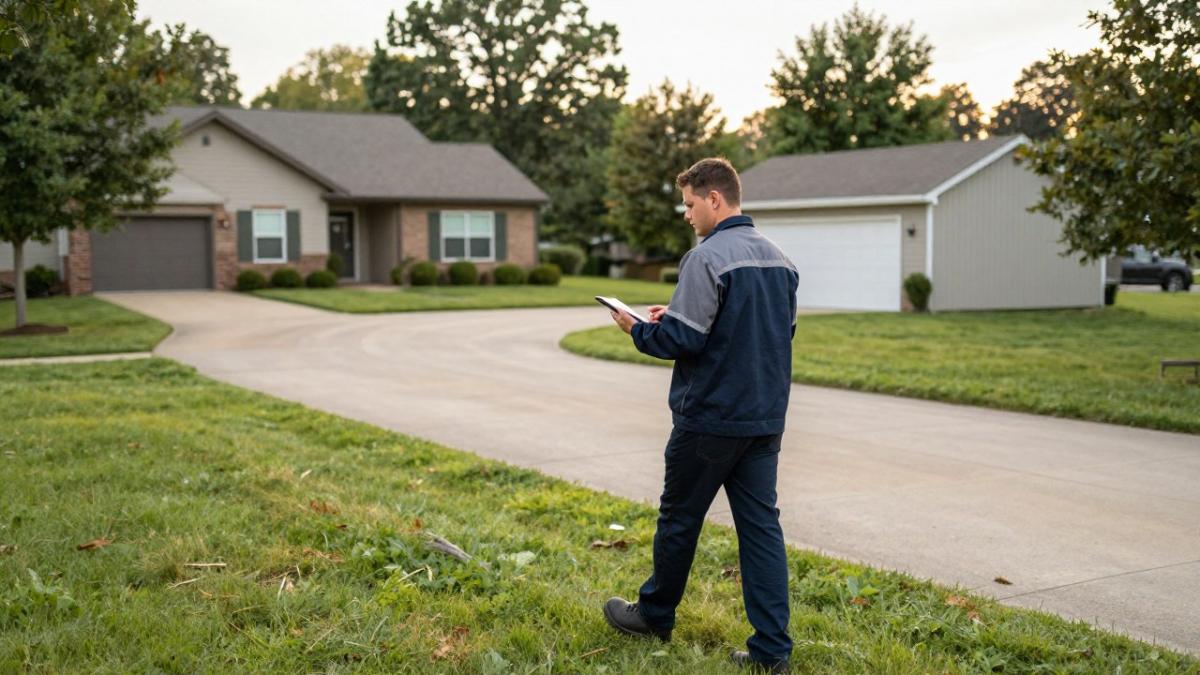
A large property is often best planned in five distinct layers, because skipping any one can leave a blind spot:
- Perimeter layer. Fence-line and property-edge detection. Cameras with person and vehicle detection, plus beam or buried sensors at the fence line, catch approach before someone reaches a door. On long fence runs, budget for detection at the corners and at any gate rather than continuous coverage.
- Approach layer. The driveway, walkways, and the space between the gate and the house. This is where a single camera rarely covers the full path. Place one camera at the gate looking in and one at the house looking out so the two fields of view overlap at the midpoint.
- Entry layer. Doors and windows on the main residence. Contact sensors on every exterior door and on ground-floor windows, plus glass-break sensors in rooms with large panes. A doorbell camera covers the front entry, but it does not replace a contact sensor on the same door.
- Structure layer. Outbuildings, detached garages, workshops, pool houses, and sheds. Each detached structure needs its own entry sensor, its own camera covering the door, and, if it holds vehicles or tools, a motion detector. Treat each structure as a small standalone system that reports back to the main hub.
- Interior layer. Motion detectors in hallways and on stair landings, plus interior cameras in high-value rooms. Interior motion is what catches someone who defeats or avoids the exterior layers.
Driveway and gate. A gate is both a choke point and a weak point. Put a camera on the inside of the gate aimed at the vehicle approach, and a second camera at the house aimed back down the driveway. If the gate is automated, an open/close sensor on the gate tells you when it has been left open. For long driveways, a camera at the gate plus a camera at the house is the minimum; a third camera at the midpoint is common on driveways longer than a few hundred feet.
Outbuildings. A detached garage or workshop is the most commonly under-covered structure on a large property. Run a camera at the man door and, if vehicles park inside, a camera covering the interior bay. A contact sensor on the overhead door and on the man door catches entry that the camera may miss at night.
Wi-Fi Coverage for Outdoor Security Cameras
Wireless cameras on a large property fail most often for a simple reason: the signal does not reach them reliably. To confirm reach before installation, professional Wi-Fi site surveys and heatmaps show coverage at each camera location. Walls, outbuildings and distance all reduce range. Before buying a system, walk the property with a phone running a Wi-Fi analyzer and record signal strength at each planned camera location. Note the reading at the camera height and at the angle the camera will actually face, because a reading taken at chest height in the open can overstate what the camera will see.
Quick Comparison: Five Smart Home Security Systems
The table below summarizes five systems for large properties. Pricing depends on the equipment, the number of zones and the monitoring plan, so check each provider's website for current pricing.
| System | Reported Starting Price | Best For | Professional Install |
|---|---|---|---|
| ADT | Contact for pricing (one source cites $49.99/month) | Large properties wanting professional installation | Yes |
| Vivint | Contact for pricing | Smart home integration at scale | Yes |
| SimpliSafe | $24.99/month | Burglary protection on a budget | Varies |
| Abode Wireless Smart Security Kit | $219 (third-party retailer listing) | Adding security to an existing smart home | Self-install |
| Ring | Contact for pricing | Recognized brand; verify coverage needs | Varies |
The 5 Best Smart Home Security Systems for Large Properties
Each system below is a credible option. None suits every property, so read the "Skip if" lines before you decide.
1. ADT: Professional Installation for Large Homes
ADT is a provider that designs, installs and supports home security systems, and professional installation is one of its main features.
Best for: owners who want one accountable company to plan, install and service the system. Skip if: you prefer to install and manage devices yourself, or you need a fixed price before a site visit.
2. Vivint: Smart Home Integration at Scale
Vivint offers smart home integration, which can help when cameras, locks, thermostats and lighting need to work together.
Best for: properties where security must connect to other automated systems. Skip if: your priority is the lowest possible monthly cost, since current pricing was not verifiable from our sources.
3. SimpliSafe: Burglary Protection on a Budget
Skip if: your property needs extensive outdoor camera coverage across many zones.
4. Abode Wireless Smart Security Kit: Adding Security to an Existing Smart Home
Abode suits people who already run a smart home and want security that fits it. Confirm current pricing directly with the manufacturer.
Best for: existing smart home owners who want a self-installed system. Skip if: you need professional installation or very large outdoor camera coverage.
5. Ring: A Recognized Brand to Verify for Your Property
Ring is a home security brand. Verify coverage, range and pricing for the exact model before buying.
Best for: owners comparing a recognized brand who are willing to verify the configuration. Skip if: you need a verified large-property package without further research.
Consumer guidance on comparing home security monitoring contracts
Smart Security System with Access Control: Integration and Cost Planning
Access control adds a second layer to a large property: gates, keypads, and credential management for staff, family or contractors. Integrating access control with cameras and alarms lets you see who entered and when, from one interface.
Pricing depends on quantity, dates, and delivery, so request a written quote from Dalcorp Solutions Inc that lists equipment, installation and monthly fees separately.
Booking a Site Survey for Your Large Property
A site survey converts the coverage plan into a specific equipment list. To weigh the cost against potential insurance savings first, check whether professional smart home security is worth the contract cost. Expect the surveyor to walk the property, test Wi-Fi at each camera location, measure distances to outbuildings, and recommend wired or wireless connections. You can request a site survey and quote from Dalcorp Solutions Inc before you commit to a system.
Frequently Asked Questions
What is the highest-rated home security system for a large property?
No single system is the highest-rated for every large property. The right choice depends on property size, the number of outbuildings, wireless range, and whether you want professional monitoring. Providers such as ADT, Vivint and SimpliSafe offer different strengths, including professional installation, smart home integration and burglary protection. Before choosing, map your property's entry points and zones, then confirm coverage with a site survey. Current pricing and equipment packages vary, so request a written quote for your specific layout.
How many security cameras does a large property need?
The number depends on how many entry points, driveways, outbuildings and blind spots your property has. Start by listing every approach to the house and every outdoor area you want to see, then place cameras to cover those routes without large gaps. Outdoor cameras need reliable Wi-Fi or a wired connection, so plan network coverage at the same time as camera placement. A site survey can confirm the count and locations before you buy equipment.
Is professional monitoring worth it for a large property?
Professional monitoring is most useful when you cannot respond quickly to an alarm, such as when you are often away or the property is spread out. Self-monitoring through a mobile app can work well for owners who are nearby and receive real-time alerts. Ask any provider for the monitoring plan's exact terms, what it includes, and whether it covers every camera and sensor in your layout. Monitoring is a recurring cost, so include it in your total cost of ownership.
Can a smart home security system integrate with access control and lighting?
Many smart home security platforms integrate with compatible smart locks, lighting, and other devices, but compatibility varies by brand and model. For a large property with gates, multiple entrances or outbuildings, dedicated access control may be a better fit than consumer smart locks alone. Confirm supported integrations in writing before buying. Dalcorp Solutions designs integrated Wi-Fi, access control and video surveillance systems for residential and commercial properties in the Chicagoland area. Contact us for a site survey and a written quote.

- Hits: 3